The information on this website is general in nature and does not take into account your objectives, financial situation, or needs. Consider seeking personal advice from a licensed adviser before acting on any information.
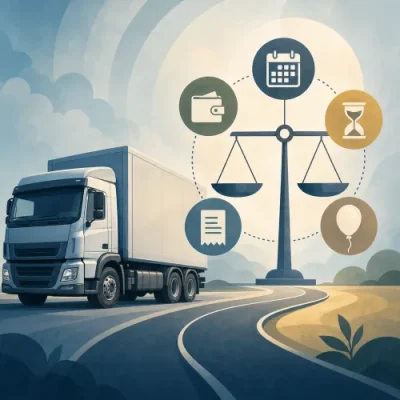
Truck loan repayments are shaped by more than the advertised interest rate. Learn how loan amount, term, fees, balloon payments, deposits, truck age and finance structure can affect the total cost of truck finance.
Truck loan repayments can look straightforward at first: borrow an amount, pay interest, and make regular repayments until the loan is cleared. In practice, the total cost of truck finance depends on several moving parts, including the loan amount, interest rate, loan term, fees, deposit, balloon payment, truck type and the finance structure you choose.
This guide explains the key factors that affect truck loan repayments in Australia, how to think about total finance cost, and why a repayment estimate should be treated as a starting point rather than a final offer. It is general information only and does not take into account your business needs, personal circumstances or tax position.
What makes up truck loan repayments?
Most truck loan repayments are calculated from three core inputs: the amount financed, the interest rate, and the loan term. Other costs, such as establishment fees, monthly account fees or a balloon payment, can also change the repayment amount or the total you pay over time.
For many commercial truck loans, repayments may be structured around a finance product such as a chattel mortgage, lease or hire purchase arrangement. For personal truck finance, the structure may be closer to a secured personal vehicle loan. Each option can treat ownership, GST, tax deductibility and end-of-term obligations differently, so it is important to understand more than just the monthly figure.
If you are still comparing the broad types of finance available, the article on lease versus buying a business truck may help you understand how the structure can affect cost and flexibility.
Key factors that affect truck loan repayments
1. The truck price and amount financed
The higher the truck price, the larger the amount you may need to finance. However, the amount financed is not always the same as the purchase price. It may also be affected by:
- your deposit or trade-in;
- on-road costs, registration or transfer costs;
- dealer delivery or preparation charges;
- whether accessories, body fit-outs or equipment are included;
- whether fees are paid upfront or added to the loan.
Adding extra costs to the loan may reduce the cash needed upfront, but it can increase the financed balance and therefore the interest charged over the life of the loan.
2. The interest rate
Truck loan rates are a major driver of repayments, but the rate you are offered can depend on lender criteria and your individual circumstances. Factors may include your credit history, business trading history, income, cash flow, the age and condition of the truck, whether the truck is new or used, and the size of the deposit or balloon payment.
It is also worth distinguishing between a headline rate and the overall cost. A loan with a lower advertised rate may still cost more if it has higher fees, a longer term or a structure that does not suit your cash flow.
3. The loan term
The loan term is the period over which you repay the finance. A longer term generally reduces regular repayments because the debt is spread over more months. However, it may also increase the total interest paid because the loan is outstanding for longer.
A shorter term can increase monthly repayments but may reduce total interest. The right balance depends on affordability, business cash flow, tax considerations, vehicle life and how long you expect to keep the truck.
4. Deposit or trade-in amount
A larger deposit or trade-in can reduce the amount financed, which may reduce repayments and total interest. It can also affect how a lender views the application because it lowers the loan-to-value ratio.
However, using too much working capital as a deposit may create pressure elsewhere in the business. Sole traders and fleet operators should consider whether cash is also needed for fuel, tyres, insurance, maintenance, payroll, compliance costs or seasonal slowdowns.
5. Balloon payment or residual value
Balloon payment truck finance allows you to set aside a larger final payment at the end of the loan term. This can reduce regular repayments during the term, but it does not remove the cost. You still need to deal with the balloon at the end.
Common options at the end of the term may include paying the balloon from cash flow, refinancing it, or selling or trading the truck and using proceeds toward the final payment. These options depend on market conditions, lender approval, the truck's value and your financial position at the time.
A balloon can help align repayments with cash flow, but it may increase total interest because a larger balance remains outstanding during the loan. It can also create risk if the truck is worth less than expected at the end of the term.
6. Fees and charges
Truck loan fees can vary by lender, broker, product and borrower profile. Possible costs may include establishment fees, documentation fees, monthly account fees, early payout fees, late payment fees or valuation-related costs. Not every loan will include every fee, and the names used can differ between providers.
When comparing truck finance costs, ask whether fees are paid upfront or added to the loan balance. If fees are capitalised into the loan, you may pay interest on them over time.
7. New versus used truck finance
New and used trucks can be assessed differently. A new truck may have a clearer valuation and longer expected working life, while a used truck may have a lower purchase price but potentially higher maintenance risk. Lenders may consider the age, kilometres, condition, service history and resale prospects of the vehicle.
For older or highly specialised trucks, some lenders may limit terms, adjust pricing or apply stricter conditions. This can affect repayments and the total cost of finance.
8. Business profile and credit assessment
For commercial truck loans, lenders commonly consider whether the business can afford the repayments. They may review bank statements, tax returns, BAS, profit and loss information, contracts, cash flow and existing debts. Self-employed applicants and newer businesses may need to provide different supporting information depending on the lender.
Credit history can also influence available options. A past default, limited credit file or inconsistent income does not automatically mean finance is unavailable, but it may affect lender choice, pricing, deposit requirements or documentation.
How finance structure changes the total cost
The same truck can produce different repayment outcomes depending on the finance structure. The table below outlines common differences at a high level.
| Finance structure | How it may affect repayments | Cost considerations |
|---|
| Chattel mortgage | Often used for business vehicles, with fixed repayments and possible balloon options. | Ownership, GST and tax treatment may differ from other structures. Seek professional tax advice for your circumstances. |
| Finance lease | May offer fixed rental-style payments and an end-of-term residual obligation. | Useful for some businesses, but total cost depends on the residual, fees, term and end-of-term options. |
| Commercial hire purchase | Payments are made over time, with ownership typically transferring when obligations are met. | May suit some asset-purchase strategies, but terms and costs vary by provider. |
| Personal truck finance | Usually assessed against personal income, expenses and credit profile. | May suit private use, but business tax outcomes and commercial-use eligibility should be checked carefully. |
The right structure is not just about the cheapest repayment. It should be considered alongside cash flow, ownership needs, expected usage, tax advice, replacement plans and the condition of the truck.
Using a truck loan calculator sensibly
A truck loan calculator can help you test scenarios before requesting quotes. For example, you can compare the effect of a larger deposit, shorter term or balloon payment on estimated repayments. You can start with the site's truck finance calculator to explore repayment scenarios using your own assumptions.
Calculator results are estimates only. They usually cannot account for every lender fee, credit assessment factor, product rule or approval condition. The final repayment amount may differ once a lender assesses the truck, borrower profile, documents and chosen finance structure.
When using a calculator, try changing one input at a time. This can show which factor has the greatest impact on affordability.
Repayments versus total cost: why both matter
A lower monthly repayment may feel more affordable, but it does not always mean the finance is cheaper overall. Total cost looks at the full amount paid over the loan, including interest, fees and any final balloon or residual payment.
For example, a longer term or larger balloon can reduce the monthly repayment but may increase interest over time. A shorter term may increase monthly pressure but reduce the overall interest cost. The better option depends on your cash flow, risk tolerance and how the truck will be used to generate income or meet personal transport needs.
It is useful to compare:
- monthly repayment amount;
- total interest over the term;
- upfront and ongoing fees;
- balloon or residual amount;
- early payout flexibility;
- what happens if the truck is sold, written off or replaced early;
- whether the finance term aligns with the truck's useful working life.
Questions to ask before accepting a truck finance quote
Before committing to truck finance, consider asking the lender or broker:
- Is the rate fixed or variable?
- What fees apply upfront, monthly and at payout?
- Are fees included in the repayment estimate or charged separately?
- Is there a balloon payment or residual value?
- What happens at the end of the term?
- Can I make extra repayments, and are there conditions?
- What are the early payout rules if I sell or upgrade the truck?
- Does the loan structure suit business use, personal use or both?
- What documents are needed before a formal assessment?
If you want help understanding how loan structure may vary by borrower profile, you can review the broker support options available through the site. A broker or lender can explain available products, but any final approval, rate and terms will depend on assessment criteria and your circumstances.
How to prepare a more accurate repayment estimate
You can improve the quality of your repayment estimate by gathering details before comparing options. Useful information may include:
- the truck purchase price or expected budget;
- whether the truck is new or used;
- deposit or trade-in amount;
- preferred loan term;
- whether you are considering a balloon payment;
- business or personal use percentage;
- expected kilometres and operating conditions;
- business trading history and income documents;
- existing debts or finance commitments.
Once you have a clear estimate of the truck cost and your preferred structure, you can move from calculator scenarios to quote comparison. The Truck Loan Finance Online homepage outlines the quote pathway for commercial and personal truck finance enquiries.
The bottom line on truck finance costs
Truck loan repayments are influenced by more than one number. Interest rates matter, but so do the amount borrowed, term, fees, deposit, balloon payment, vehicle type and borrower profile. A calculator can help you understand likely repayment ranges, but a formal quote requires lender assessment.
Before choosing truck finance, compare both the regular repayment and the total cost over the full term. The most suitable structure should support your cash flow, truck usage and long-term plans without relying on assumptions about approval, resale value or future refinancing.
Published: Monday, 31st Aug 2026
Author: Paige Estritori




No comments yet. Be the first to share your thoughts.